From Power to Data: Why PoDL and PoE Are Reshaping Vehicle Network Architecture
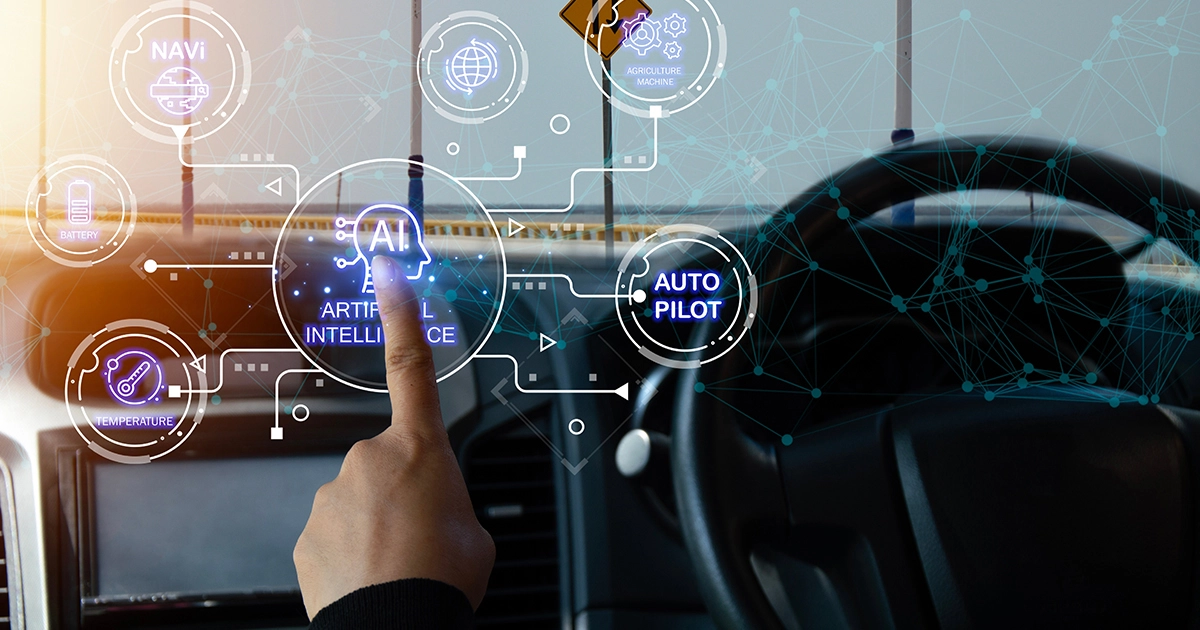
Automotive technology progression is accelerating at a rate that is unmatched in most industries. The demands of the driver on the vehicle are increasing at a rate that is outpacing the abilities of the conventional electrical systems on most vehicles. Increased electrical demand on the vehicle has been increasing the amount of wiring present in the vehicle, and is a problem for designers, manufacturers, and repair technicians. As the vehicle transitions with artificial intelligence (AI) and becomes a software-defined vehicle (SDV), the increased computing power will decrease the need for multiple modules spread throughout the vehicle. This change will also increase the demand for communication protocols, which is leading to a new standard in modern vehicles.
Vehicle Communication Architecture Shift
The current way of controlling is more of a direct connection type of network that relies on a larger wiring infrastructure. The harnesses on most vehicles have grown to up to a mile of wire, while weighing over 150 pounds throughout the vehicle (Staff, 2019). With the increased demand from the consumer for features, the OEMs have had to increase the wiring capacity for power and communication throughout the vehicle. Controller Area Networking (CAN) has been in production since 1991 and mandatory since 2008 (Controller Area Networking Standard -ISO 15765-4, 2008). This development of the faster standard provides a platform for quicker decisions and reactions to the current environment. As the demand for computing power increases, the need for more power and faster networking is increasing the load on the network and is pushing the designers to come up with a better way to connect the increasing number of ECMs on the vehicle. With the coming of Advanced Drivers Assistance Systems (ADAS), Autonomous driving systems and Artificial Intelligence (AI), the connectivity throughout the vehicle must keep up with the required latency of communication.
To help solve this issue, the OEMs are turning to Power over Ethernet (PoE) or Power Over Data Lines (PODL). This technology is already prevalent in the IT world and is now being adapted to the world of mobility. The benefit of this type of technology is it sends both power and data over a twisted pair of cables which will simplify the design of the related wiring harness throughout the vehicle. To understand why PoE is so critical now, we first need to look at the massive architectural shift happening within the vehicle itself.
From Domain to Zonal
Vehicles have used domain-based architecture for a number of years since the invention of networked vehicles. Electronic Control Units (ECUs) were grouped by function into domains—like powertrain, infotainment, body control, and suspension systems. Each sensor and actuator were individually wired back to its related domain controller. This domain controller system is a structural component that the entire vehicle’s electrical system was built around to provide it with the input needed to make decisions. These systems were very point A to B types of systems that provided individual sensors for individual systems to allow those systems to run their own processes with little input from another system. This works great when all systems are working correctly without the degradation of information from the other systems.
The latest solution is zonal architecture. Instead of grouping ECUs by function, the vehicle is divided into physical zones (e.g., front-left, front-right, rear, cockpit). High-performance zonal gateways are placed in each zone. Sensors and devices within that zone connect to their local gateway using short, simple cables. These gateways then process much of the data locally and communicate with each other and a central vehicle computer over a high-speed automotive ethernet backbone. This is where the PoDL increases its use case. PoDL provides for a simple, compact and fast networking scheme that provides data and power lines within one harness (Graf, 2023). This short run from the component to the zonal gateway provides for a quick information capture and decreases travel time from the component to a processing module. The standard IEEE 802.3bu governs the speeds and architecture of this type of communication protocol in automotive applications (Schwarze et al., 2021). It groups devices into different power levels which allows it to deliver from a fraction of a watt for a simple sensor up to about 50 watts for a more demanding component like an infotainment display (Schwarze et al., 2021). Having this standard allows the OEMs to develop these technologies in the SDVs of the future.
Key Applications Driving PoE Adoption in Vehicles
The move to zonal architecture powered by Automotive Ethernet/PoDL unlocks a new world of possibilities. ADAS sensors (cameras, Radar, LiDAR) are one of the major drivers for this adoption. The increased data generated by these components requires a larger transfer of information throughout the vehicle so it can be processed in a timely fashion. The speed that this information needs to get to the controller, have it process that information, make a decision and then send it throughout the vehicle for a response has increased to the point that it needs to be as close to instantaneous as possible. Including the infotainment systems, supplemental restraint system (SRS) and connectivity systems, increases the load on the system to the point the current CAN protocol will not be able to handle that increased load. In an effort to simplify the wiring throughout the vehicle, the transition to PoDL has provided the opportunity to control low voltage components with the same twisted pair harness that is ran throughout the vehicle. With this lower power demanding components, the thermal management of the component and the wiring will be easier to control as they do not have as much amperage running throughout the vehicle.
What This Means for the Automotive Technician
The transition to zonal architecture and PoE/PoDL represents a major shift for automotive service and repair. The skills that technicians need are evolving rapidly and require an increased skill set that understands how these technologies interoperate with the rest of the vehicle and the outside world. The demand for technicians who understand vehicle networking and advanced electronics will only grow, creating significant opportunities for those who stay ahead of the curve (Zachäus & Meyer, 2020). Mending the mechanical, electrical and computer skills in a way that was not previously used will continue to evolve. PoE, specifically in its automotive-grade PoDL form, is more than just an evolution of communication that is needed to keep the data moving at a low enough latency that allows autonomous/ADAS systems to operate in real time. It is a critical enabling technology that is making SDVs a reality and reducing production cost as the vehicle evolves.
The MAST series of CDX provides the instructor with pointed material to exceed the requirements of any ASE training currently on the market. Utilizing the Read-See-Do model throughout the series, the student has various learning modalities present throughout the products which allow them to pick the way they learn the best. From developing simulations on cutting edge topics to providing a depth of automotive technical background, CDX has a commitment to making sure instructors and students have the relevant training material to further hone their skill sets within the mechanical, electrical and software driven repair industry. CDX Learning Systems offers a growing library of automotive content that brings highly technical content to the classroom to keep you and your students up to date on what is currently happening within the Mobility Industry. Check out our Light Duty Hybrid and Electric Vehicles, along with our complete catalog.
About the Author
Nicholas Goodnight, PhD is an Advanced Level Certified ASE Master Automotive and Truck Technician and an Instructor at Ivy Tech Community College. With over 25 years of industry experience, he brings his passion and expertise to teaching college students the workplace skills they need on the job. For the last several years, Dr. Goodnight has taught in his local community of Fort Wayne and enjoys helping others succeed in their desire to become automotive technicians. He is also the author of many CDX Learning Systems textbooks, including Light Duty Hybrid and Electric Vehicles (2023), Automotive Engine Performance (2020), Automotive Braking Systems (2019), and Automotive Engine Repair (2018).
References
Controller Area Networking Standard -ISO 15765-4, ISO (2008). https://www.iso.org/obp/ui/es/#iso:std:iso:15765:-4:ed-2:v1:en
Graf, S. (2023). Single-Pair Ethernet with Power over Data Line. www.ti.com
Schwarze, F., Protze, F., Kreisig, M., & Ellinger, F. (2021). Design and Latency Analyses of an Enhanced Mixed-Signal Coupling Network With Adaptive Noise Cancellation for Power Over Data Lines [Article]. IEEE Transactions on Vehicular Technology, 70(3), 2514–2528. https://doi.org/10.1109/TVT.2021.3060913
Staff. (2019). Shedding Pounds in Automotive Electronics. Semiconductor Engineering. https://semiengineering.com/shedding-pounds-in-automotive-electronics/.
Zachäus, C., & Meyer, G. (2020). Intelligent System Solutions for Auto Mobility and Beyond. https://doi.org/https://doi.org/10.1007/978-3-030-65871-7