The Evolution of Automotive Chassis and AI: Advancing Towards Smart, Connected Safety Solutions
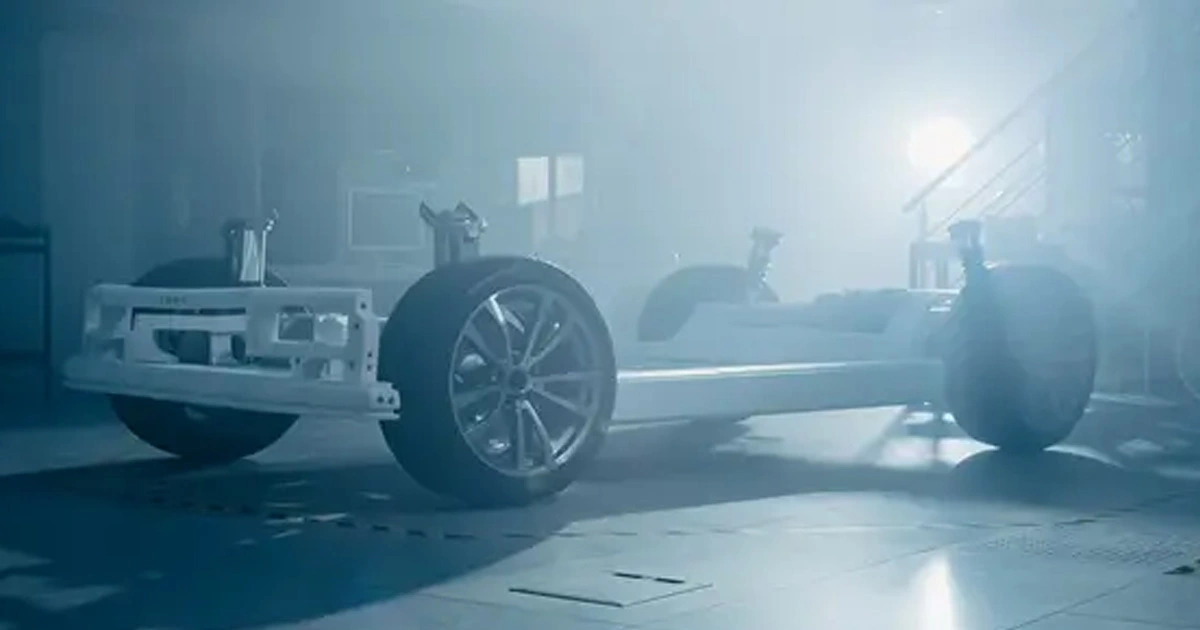
Much has been discussed about how Artificial Intelligence (AI) is transforming the way vehicles communicate, function, and respond to their surroundings. However, there has been less attention paid to AI's impact on the vehicle’s chassis. The chassis serves as the foundation of an automobile, supporting all components, housing the driver, and ensuring operational longevity. From managing cabin features to enabling airbags to react instantly to collisions, vehicle safety systems are advancing rapidly (Satheesh et al., 2025). Many of the systems drivers depend on every day remain largely unnoticed or misunderstood. While most people are familiar with engines and transmissions, recognizing the importance of their maintenance suspension systems and communication between all these systems are usually ignored because of not understanding what needs to be done to maintain them. The automotive technician must be able to connect the dots on these systems to understand what is needed for conducting efficient repairs. It's crucial to thoroughly understand how these systems function, how to diagnose issues, and how to perform proper repairs to effectively serve customers in the field.
Those that repair, build and explain how these systems are dependent on each other while meeting the needs of the driver must now include the connected vehicle and AI in the discussion around adaptive chassis systems. Today’s vehicles are no longer just mechanical systems that function independently of each other, they must work together to maintain high efficiency which will lower energy consumption and increase vehicle performance. Throughout this blog we will look at these systems and how they are changing.
The Chassis Legacy
The chassis is the platform all of the vehicle’s components are attached to which provides it a framework to provide the motivational force for the driver. Everything from suspension components, braking systems, steering, body and powertrain components all connect to each other though the chassis. All these systems have operated in an environment that was heavily mechanical and hydraulic that provided output to the independent nodes on a network that made simple decisions to increase the coordination between systems. These systems were very independent from each other till the modern vehicle started moving toward a more centralized control structure. As antilock braking systems (ABS), electronic stability control (ESC) and electronic power steering systems (EPS) started appearing on the vehicle, the need for more deliberate coordination was required. When the engine is trying to accelerate and the ABS is trying to stop the vehicle in a unique event, a little coordination is needed to keep the situation safe for the occupants. Add to these the various sensors (wheel speed, steering angle, yaw, etc.) the amount of data that is being collected is increasing at an exponential rate. To process all of this incoming data the computing power must increase to keep the decision time cost to a minimum and boost the likelihood of it helping the driver avoid a crash.
As the vehicle becomes more connected internally the ability of the technician to diagnose its individual systems requires them to understand what is affecting each system and causing it to operate. The proliferation of AI within the vehicle will have a large impact on the ability of the vehicle to brake when an event happens in front of it, steer away from the potential impact event and even guide the vehicle to its destination. As with all automotive systems, the driver is the fail-safe when the system decides not to work properly, the driver is the one who is supposed to regain control and maintain the proper operation of the vehicle. As autonomous operations take over, the driver is now becoming secondary to the system maintaining vehicle operations. This is very hard for those that have been driving for decades as they were taught, they were in control and that they had the ultimate responsibility for vehicle operations.
Suspension: Grip, Comfort, and Control
The suspension system manages the connection between the vehicle body and the wheels. The function of this system is to absorb the road conditions before they get transferred to the chassis and ultimately the driver. As designers implement Quantum computing algorithms the ability of the chassis to adapt to the roadway is increasing at a rate that it will dynamically produce a product that is not susceptible to road force abuse and increase the longevity of the components (Arshad et al., 2025). Situational adaptation is something that engineers have been looking at doing since the beginning of the automobile. Making a one-size-fits-all vehicle requires a lot of robust components that increase manufacturing costs and require over engineering to keep up with the abuse demand. Utilizing AI to design, test in various situations and manufacture in a deliberate way, the ability of these components to stand up in the harsh environment is crucial to vehicle longevity. Putting material where it is needed and making sure the operational dynamics can support operations in the harsh environments a vehicle operates in will increase the applicability of the process.
Active and Adaptive Suspension
We have had active and adaptive suspensions since the 1957 Cadillac Eldorado Brougham first introduced an advanced suspension using electronically controlled dampers or air springs that change stiffness and introduced the first production air ride system which provided an industry leading ride (Francis, 2025). As the years have progressed the capabilities have increased to the point where now we are using Magnetorheological fluid that we are controlling with a pulse width modulator to dampen each corner of the vehicle differently in real time (Karikalan et al., 2026). Sensors measure wheel and body motion, the control units tune each damper to balance comfort and handling. In performance and luxury vehicles, active anti-roll systems and predictive suspension can even use cameras to help lessen the disturbance of running over a bump or hole within the roadway. These systems are part of the broader chassis control ecosystem, where braking, steering, and suspension are coordinated to manage body roll, pitch, and yaw. AI can further optimize this coordination, identifying patterns in driving style and road conditions to keep the car stable while maximizing comfort and efficiency. Add to this controlling the power output of the engine or electric motor to help with controlling the available torque, it is becoming a complete vehicle effort to maintain control.
With the integration of a connected vehicle, the ability to crowdsource road conditions based on the vehicle who traveled before you are available for the following vehicles to adapt to before they get to the potential hazard. Utilizing the onboard AI and edge computing models the vehicle will adjust the suspension height, stiffness of the shock absorbers, and other vehicle components to minimize the disturbance to the occupants (Edge Computing). Along with road conditions, the onboard computing systems can change the cabin environment to match what is happening outside so if you are traveling through a thunderstorm wipers and lights could get turned on or if your changing elevations and the temperature changes it has the ability to apply the thermal control systems to maintain cabin comfort.
Getting Connected Increases Operational Efficiency
Modern traction control and integrated chassis control systems coordinate wheel brake forces, steering angle, and even active suspension settings to control yaw and body roll. As a vehicle cannot overcome the laws of physics the best that a vehicle can do is mitigate those forces and allow the vehicle to maintain control of its operation. This is done by utilizing the systems discussed above to have them operate as one unit to advance the capability of the vehicle as it moves down the roadway. In vehicles with advanced ADAS or automated driving, an AI-based controller supervises all of this, predicting how the vehicle will respond a moment into the future and making pre-emptive corrections instead of just reacting after a slip occurs. The goal of any of these systems is to provide the foundation of the next generation of vehicle chassis systems. The next leap is already underway with By-Wire architecture.
Tesla introduced the first production vehicle with drive, steer and brake by wire architecture which provides the vehicle with no physical connection between the driver’s hands and feet and the systems that operate the chassis (Wang, 2023). We have utilized this type of technology in small instances with redundant backups in the past with hybrid drive architecture and rear steering models. Add to these systems the shift to 48 V power supply the ability of these systems to overcome failures and maintain control is the hindrance for this adoption in the past (Kane, 2023). This is forcing other OEMs to shift their mindset to the next generation of vehicle electrical and mechanical architecture. Lexus, Toyota, NIO and others are working on developing systems that operate on similar architectures and currently the biggest hinderance is availability of components that operate on this elevated voltage level. As we all know, the higher the voltage the lower the amperage, which helps to simplify the design and manufacture of components for operation. As these take over new operational control within the chassis systems the move will proliferate throughout the vehicle to encompass every system that used to be mechanically controlled. When this happens then the onboard computing systems will have instantaneous control of the vehicle which will accelerate the electric conversion of the vehicle and push the OEMs to further reduce vehicle components.
One of the major issues with all of the mechanical systems on the vehicle is the presence of Noise Harshness and Vibration (NVH). Moving mechanical components require proper phasing and balancing to control the rotational force which can get transferred into the chassis and the steering system. A lot of what technicians diagnose is a random vibration that is related to rotational speed of a wheel, drive shaft or differential that is causing the customer a concern that they do not like. Moving towards a more electrified system operation will decrease the number of moving components and the system will have more control on the operation of those components with the ability to adjust each on the fly to manage any vibrations that may occur. Providing the onboard AI systems with this ability to modulate these systems increases control and provides a path to a vehicle that can be adjusted infinitely to maintain the comfort of the occupants.
Conclusion - The Future of Vehicle Safety Is Intelligent Chassis 3.0
In automotive engineering, the intelligent chassis refers to the integration of advanced control systems that manage how a vehicle responds to the road, enhancing safety, comfort, and performance. Over decades, we've added these features incrementally—one system at a time. Now is the time for confluence, which means uniting these previously separate technologies into a single, cohesive platform. This development is pushing industry toward autonomous vehicle operation and towards a more intuitive motor vehicle experience. From controlling the harshness of the ride to the ability to change the ride height of the vehicle, the ability to do so allows the vehicle to be adapted to the situation. As AI is immersed more into the chassis systems the ability of those have been shown to increase capability. Real world prediction of the next event is vital to anticipating what may happen so it can adjust the systems to compensate for that potential event. For educators and students, chassis systems are a perfect bridge between automotive technology and the emerging world of software, data, and intelligent control. For enthusiasts, they offer a deeper appreciation of what your car does every time you hit the brakes, turn the wheel, or roll over a bump—and a glimpse of how the cars of tomorrow will quietly work even harder to keep you safe. Keeping the momentum of technician development is vital to understanding this quick changing technology throughout the industry.
The MAST CDX series gives instructors materials that surpass ASE training standards. Using the Read-See-Do model, students can choose their preferred learning style. CDX offers advanced simulations and technical content to support skill development in mechanical, electrical, and software-driven repair. Their expanding library helps keep classrooms updated on industry trends. See the Light Duty Hybrid and Electric Vehicles section and the full catalog.
About the Author
Nicholas Goodnight, PhD, is an Advanced Level Certified ASE Master Automotive and Truck Technician and Instructor at Ivy Tech Community College. With over 25 years of experience, he teaches workplace skills and authors several CDX Learning Systems textbooks, including Light Duty Hybrid and Electric Vehicles (2023), Automotive Engine Performance (2020), Automotive Braking Systems (2019), and Automotive Engine Repair (2018).
References
Arshad, M. W., Lodi, S., & Liu, D. Q. (2025). Multi-Objective Optimization of Independent Automotive Suspension by AI and Quantum Approaches: A Systematic Review. Machines, 13(204). https://doi.org/10.3390/machines13030204
Francis, K. (2025, May 19). The First Production Car With Air Suspension Is An American Legend. CarBuzz. https://www.msn.com/en-us/autos/autos-luxury/the-first-production-car-with-air-suspension-is-an-american-legend/ar-AA1F6kC8
Kane, M. (2023, March 11). Tesla Confirms the Switch to 48 Volt Systems. https://insideevs.com/news/656775/tesla-switch-48v-voltage-system/#:~:text=Tesl
Karikalan, L., Padmanabhan, S., Singh, A. P., Dhapekar, N. K., Kumar, P., Baskar, S., Kumar, P., & Pandey, K. K. (2026). A Study on Employment of Magnetorheological Fluid in Automotive and Engineering Domain. In A. K. Shukla, D. G. Thakur, & A. Arabkoohsar (Eds.), Recent Advances in Mechanical Engineering (pp. 227–238). Springer Nature Singapore.
Wang, B. (2023, December 9). Tesla Cybertruck Ethernet and 48V Saves Labor and Chips. Next Big Future. https://www.nextbigfuture.com/2023/12/tesla-48-volt-system-is-better-simpler-and-cost-saving