Edge Computing, Edge Intelligence, and AI: The Foundation of Automotive Autonomous Technology
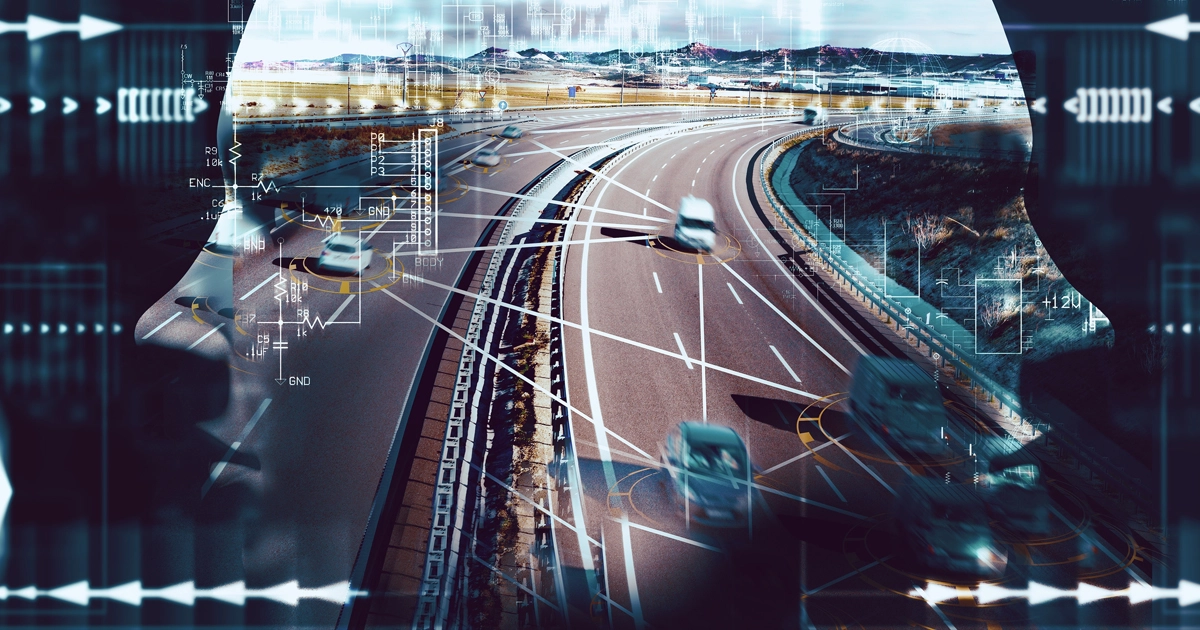
As the automotive sector has been building the autonomous vehicle through connectivity with 5G, Wi-Fi, connected systems and smart infrastructure, the ability of the vehicle to navigate itself through obstacles has increased to a point where the bottleneck now is the speed at which it can receive directions or process information. Prior to autonomous vehicle deployment, vehicles generated very little data which was primarily used to operate the ICE. As vehicles generated more data through various sensors and the world became more connected, the vehicle started to increase the amount of data it was generating. OEMs started using this information to help direct the vehicle to a more efficient outcome which drove them to the software defined vehicle (SDV). For the SDV to operate properly, it needs to be connected to the internet so updates and control protocol can be sent from the OEM to maintain the vehicle’s software.
As we inch closer to actual Level 4 and Level 5 autonomy, a realization moment is taking place. Engineers are realizing that the cloud is not the complete solution; in many critical scenarios, it is actually the problem. To safely deploy these systems in a large environment, we will need to manage the data on a vehicle to increase the reaction time and decrease the computing time. This is where Vehicular Edge Computing (VEC) comes in.
The Latency Threshold: The Importance of Milliseconds
While on-vehicle computing is common throughout the history of the modern automobile, the ability of the vehicle to compute something more than simple sensor data is becoming a thing of the past (Blanco et al., 2023). The addition of more human related comforts, enhanced sensor precision on electric motor and ICE equipment, the need for increased processing power is causing vehicle designers to adapt higher computing powered ECUs to process all the information. Currently a lot of these calculations are being handled on vehicle with the help of cloud assisted technologies which is requiring the vehicle to off load some of the “work” to a higher processing unit elsewhere. With Tesla leading the way with providing more on-board computing power than previous vehicles, they are forcing the OEMs to rethink how they are going to develop the newer vehicles (Lambert, 2023).
When looking at why edge computing is becoming a requirement you need to first understand what Latency is. Latency is the measurement of delay in the system which is developed by measuring the amount of time it takes for data to travel from one point to another across a network (Goodwin, 2026). The amount of data that is being generated throughout one vehicle that a decision must be made on is growing at a rate that is unsustainable to transmit effectively. Level 2-4 autonomous controlled vehicles increase the content generated to the tune of 30-1,000 TOPS depending on the level of autonomy (Markets, 2025). TOPS refers to Tera Operations Per Second which is the throughput ability of the system to process information through a Neural Processing Unit (NPU) (Smith, 2024). The NPU is a parallel processing unit that utilizes the sensor fusion present on the vehicle and connects it through processing power, connection to an AI model and/or connection to the cloud to increase processing power in the current form. In a cloud-centric model, a vehicle’s sensors (LiDAR, Radar, Cameras) collect data, compress it, upload it to a centralized cloud server, wait for processing, and then receive a command back. In ideal conditions, 5G offers low latency which should be able to transmit and receive the needed information, but automobiles do not operate in ideal conditions. Weather, tunnels, buildings, magnetic interference and other vehicles can cause potential interference with this process which will delay a response. Along with those aforementioned potential failure points, the cloud computer must then process that data, make a decision and then send it back to the vehicle. With the rise of the SDV the processing power of the vehicle has increased to a point where it can make a majority of the decisions on the vehicle. Add to that processing power the ability of an AI assistant to increase the speed of decision processing; the vehicle is a rolling decision machine.
Scenario
In a vital mobility event such as an icy patch of road that causes the vehicle to skid. The decision processes the autonomous vehicle must determine is if it will not hit the vehicle in front of it or if it will have enough control to swerve to miss it. All the while the vehicle is monitoring the vehicle behind it to see what it is doing and if it is in a skid event. The following two scenarios are potential outcomes for the event to take place.
Cloud Model: The car uploads this data to a server. The server processes it. The server sends a warning to other cars. Total time: 2-5 seconds. Too late for the car behind you.
Edge Model: Upon detecting a low-friction condition, the vehicle processes the event locally and immediately transmits a hazard notification over Direct Short-Range Communication (DSRC) or Cellular Vehicle to Everything (C-V2X) to all cars within 300- meters. Receiving vehicles use the message to pre-charge their brakes prior to encountering the icy surface. End-to-End latency is under 100 milliseconds.
This is the Latency problem. Edge computing moves the decision process from a cloud access and remote service to the “edge of the network”, the vehicle. It eliminates the cellular network as a bottleneck within the decision process but does require a higher performing NPU, vehicle sensors and high-speed vehicle networking to keep this process at the lowest latency possible. Even if latency wasn’t an issue the cost to transmit and process terabytes of information from the millions of vehicles on the road would stress the system and would cause the owner to have a larger subscription plan to manage the data their vehicle generated.
The Silicon Shift: The Rise of the NPU
If we are pushing the vehicle to become an edge server, it needs different silicon and components. Since the start of electronic fuel injection cars ran on Microcontroller Units (MCUs), simple, low power chips to control things from fuel injectors to ignition control modules. These simple computers were in the range of 16bit to 64bit which worked great for the minimal requirements needed for fuel injection and ignition control throughout the years. The demand for an on-vehicle edge AI has forced the change to a System-on-Chip (SoC) architecture (Venus et al., 2025). Integrating the NPU within the SoC architecture we are moving away from conventional Powertrain Control Module (PCM)s and Vehicle Control Modules (VCM)s. Companies like NVIDIA and Qualcomm are putting supercomputers into the vehicle and moving towards a zonal architecture which is providing for a more simplified networking standard with increased speed (SDVs). One of the key benefits in the age of connectiveness is putting the processing back on the vehicle there is another source of privacy built to shield the vehicle from outside characters. Without sending vital information to the cloud network the possibility of data breaches become less and less as more information stays local without getting shared out. This automotive independence does come at a cost as increased computing power and software power requires a higher initial investment but will pay dividends in increased privacy and ability to meet the needs of the new generation of customers.
Conclusion
The shift from simplistic ECUs to a more complex SoC architecture that the technician must be able to understand as it will undoubtedly fail. As technology advances the technician will continue to be asked to diagnose increasingly complex systems while still retaining the previous information they developed their skills on. When on a random day they could work on an early 2000’s Toyota Camry with a basic injection system to a 2026 Chevy Silverado EV that has no fuel injection, that technician must be able to troubleshoot communication standards on varying networking schemes as the customer still needs it fixed. Edge computing will be another foundational shift in the way data is generated and processed on the vehicle. The technician/company owner must be able to meet these new requirements when they are presented. The scope of skills will continue to advance while still retaining some of the older information to fall back on when needed. I am not saying that every technician must be able to work on everything, but the basics of each are the same voltage, amperage and resistance. Breaking down these systems into the most basic pieces is vital to moving in the right direction and getting to the proper repair in the most efficient way possible.
The MAST series of CDX provides the instructor with pointed material to exceed the requirements of any ASE training currently on the market. Utilizing the Read-See-Do model throughout the series, the student has various learning modalities present throughout the products which allow them to pick the way they learn the best. From developing simulations on cutting edge topics to providing a depth of automotive technical background, CDX has a commitment to making sure instructors and students have the relevant training material to further hone their skill sets within the mechanical, electrical and software driven repair industry. CDX Learning Systems offers a growing library of automotive content that brings highly technical content to the classroom to keep you and your students up to date on what is currently happening within the Mobility Industry. Check out our Light Duty Hybrid and Electric Vehicles, along with our complete catalog Here.
About the Author
Nicholas Goodnight, PhD is an Advanced Level Certified ASE Master Automotive and Truck Technician and an Instructor at Ivy Tech Community College. With over 25 years of industry experience, he brings his passion and expertise to teaching college students the workplace skills they need on the job. For the last several years, Dr. Goodnight has taught in his local community of Fort Wayne and enjoys helping others succeed in their desire to become automotive technicians. He is also the author of many CDX Learning Systems textbooks, including Light Duty Hybrid and Electric Vehicles (2023), Automotive Engine Performance (2020), Automotive Braking Systems (2019), and Automotive Engine Repair (2018).
Related Content
Advancing Human-Machine Interface Technologies in Automotive Applications
The Influence of AI on the Future of Automotive Technology Development
How Connected Vehicles Are Reshaping the Automotive Industry
References
Blanco, D. F., Le Mouel, F., Lin, T., & Escudie, M. P. (2023). A Comprehensive Survey on Software as a Service (SaaS) Transformation for the Automotive Systems. IEEE Access, 11, 73688–73753. https://doi.org/10.1109/ACCESS.2023.3294256
Goodwin, M. (2026, March 15). What is latency? IBM. https://www.ibm.com/think/topics/latency
Lambert, F. (2023, February 15). Tesla’s new self-driving (HW4) computer leaks: Here’s a teardown. Electrek. https://electrek.co/2023/02/15/tesla-self-driving-hw4-computer-leaks-teardown/
Markets, R. (2025, November 19). Next-Generation Automotive Computing Market 2026: Nvidia Leads with Drive Platform, Orin SoC, and Next-Gen Thor Targeting Level 4 ADAS Performance - Global Long-term Forecast to 2036. Global Newswire. https://finance.yahoo.com/news/next-generation-automotive-computing-market-090200195.html
Smith, M. (2024, June 5). What is TOPS? The AI Performance Metric Explained. Microcenter. https://www.microcenter.com/site/mc-news/article/ai-tops-explained.aspx
Venus, A., Poltronieri, G., Jong, M. de, & Kellner, M. (2025). The rise of edge AI in automotive. https://www.mckinsey.com/industries/semiconductors/our-insights/the-rise-of-edge-ai-in-automotive#/