Thermal Management as a Performance Enabler in Modern Vehicles
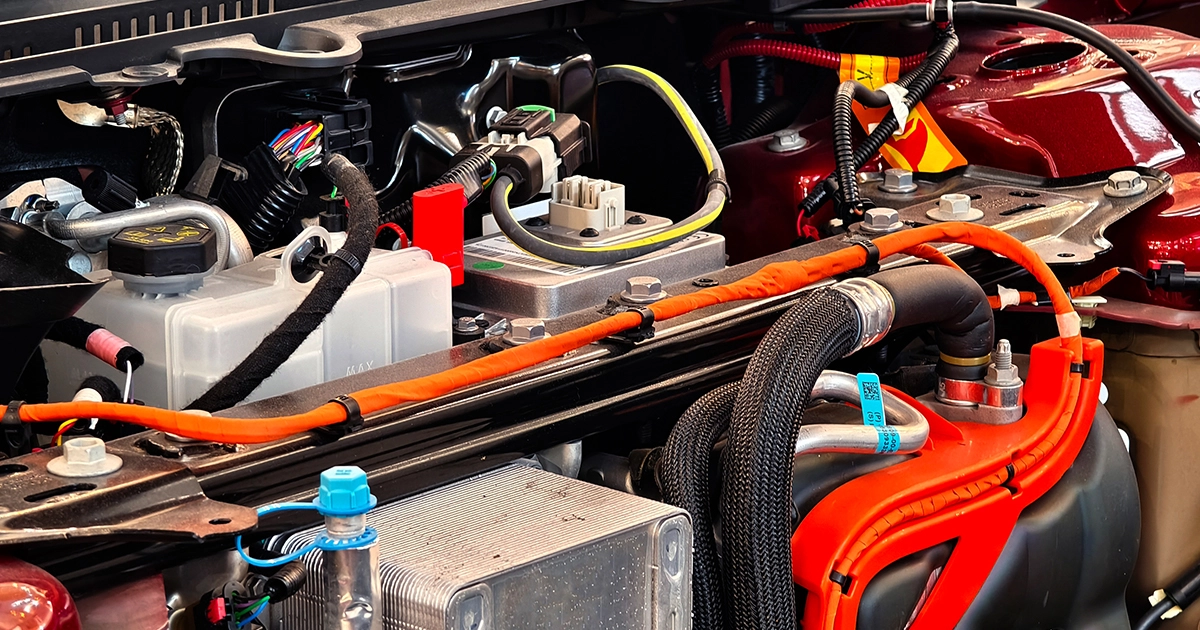
Throughout the history of the automobile, the need for controlling the heat generated by the engine has been vital to the longevity of the engine. As we transition into the electric vehicle (EV) era, the need to control the heat generated by the driver motor, battery pack and high voltage electronics is the same as controlling thermal systems on a conventional engine. Currently, it is projected that 58% of passenger vehicles will still be powered by an internal combustion engine (ICE) by 2030 (Dahham et al., 2022). Thermal management has become much more precise as the transition to a fully electrified future requires a more efficient use of energy present on vehicles. Controlling heat is vital to automotive development because it directly affects EV charging speed, driving range, battery safety, long term durability, and the occupant in the vehicle cabin. All of these systems must work together to create an experience that is desired by the driver.
Why Thermal Management Matters More Than Ever
Internal combustion engine equipped vehicles, thermal management is traditionally focused on maintaining engine operating temperature and cabin comfort. This has been fairly straight forward as it encompasses the thermal dynamics of heat transfer from one medium to another through the process of conversion or convection (Lemort et al., 2023). This has also been accomplished through the process of conduction in a more solid-state situation which allows for a more simplified design. In hybrid and electric vehicles, that responsibility has expanded into a vehicle-wide challenge involving battery packs, traction motors, inverters, onboard chargers, DC-DC converters, refrigerant loops, and heat pump systems. These various systems require a more precise transfer protocol to maintain operational capacity and decrease possibility of thermal runaway. Thermal runaway is a self-reinforcing or reoccurring process where the rising temperature accelerates the heat generation faster that it can be dissipated which can lead to fires or explosions if not contained.
This shift matters because the thermal behavior of these systems is tightly linked to performance and driver comfort. If temperatures rise too high, the vehicle may reduce output, slow charging rates, or activate protective strategies to prevent component damage If temperatures are too low, battery resistance increases, available power falls, regenerative braking can be restricted, and more energy is consumed to warm the pack or cabin to maintain the temps desired. When the temperature moves out of the efficient range the electricity needed to bring that back into tolerance is a decrease in the available power needed to operate the vehicle. Large temperature swings from high to low or low to high is where the most power is expended, which then reduces the power present for vehicle propulsion. That means thermal management is no longer just about preventing failure; it is about enabling the vehicle to reach and sustain its intended performance targets under varying ambient conditions, drive cycles, payloads, and charging scenarios. Maintaining the proper thermal loads allows the vehicle to feel more finished and responsive to the driver operating the vehicle.
Power Electronics Need Precise Thermal Control
Power electronics such as inverters, onboard chargers, battery management systems and converters are essential to electrified propulsion; they are also extremely sensitive to thermal loading. Utilizing separate cooling loops for various systems on the vehicle allows them to easily move the heat away from the components as they heat up. These loops also help when trying to heat up the pack so it can accept a charge. Separate loops allow each one to meet the needs of that system independently of other systems in the vehicle. A new thermal control measure that is being trialed is the use of phase change materials (PCM)s which allow better control of thermal events in critical systems (Togun et al., 2025). Similar to the way refrigerant moves heat to and from the vehicle by changing state, PCMs utilize nanofluids that offer nanoparticles that enhance the medium as it absorbs heat within a battery pack or power electronic system (Biswal et al., 2025). Adding these specialty fluids to the cooling systems will require the technician to understand which systems utilize these highly complex liquids. These specialty fluids operate alongside the conventional types of refrigerants and glycol-based liquids to maintain the thermal control of the various systems on the vehicle. While the ability to transfer (or move) some of the latent heat from one system to another, the vehicle has the ability to manage its system individually or collectively.
New Technologies Shaping the Future
The future of automotive thermal management will likely involve a mix of better hardware and smarter control. Heat pumps, multi-loop architectures, improved thermal interface materials, oil-cooled motors, and more capable refrigerant management are already becoming more common in vehicle platforms. This shift also increases the use of software defined vehicle (SDV) architecture and artificial intelligence (AI) to determine the most efficient use the thermal event throughout the vehicle. On-board computing power could direct the heat into the battery pack to get it read for a charge before the vehicle gets to a charging station or it could mean the power electronics system is too hot and needs to be cooled; using the thermal event to the advantage of the vehicle maintains a majority of the power for propulsion and not wasting it through the energy conversion process.
Conclusion
Thermal management should no longer be viewed as a secondary engineering subsystem. In modern electrified vehicles, it is a direct enabler of power delivery, charging speed, range, comfort, safety, and vehicle durability. As automotive platforms become more electrified, more connected, and more software-driven, the ability to move and control heat efficiently will continue to separate average vehicles from exceptional ones. The modern automotive technician must understand the waste of heat is something that a modern vehicle cannot do. Energy costs are increasing on a daily basis which is one of the main reasons for more efficient use of any thermal event that has occurred. In the past the excess heat was merely released into the surround air to dispose of it in the most efficient way possible. The waste of thermal energy that an internal combustion engine off puts is something that can no longer be accepted. Thermal management is not simply about keeping components cool; it is about increasing the full potential of the entire vehicle to make the experience of the operator one that is what they desire.
The MAST CDX series gives instructors materials that surpass ASE training standards. Using the Read-See-Do model, students can choose their preferred learning style. CDX offers advanced simulations and technical content to support skill development in mechanical, electrical, and software-driven repair. Their expanding library helps keep classrooms updated on industry trends. See the Light Duty Hybrid and Electric Vehicles section and the full catalog.
About the Author
Nicholas Goodnight, PhD, is an Advanced Level Certified ASE Master Automotive and Truck Technician and Instructor at Ivy Tech Community College. With over 25 years of experience, he teaches workplace skills and authors several CDX Learning Systems textbooks, including Light Duty Hybrid and Electric Vehicles (2023), Automotive Engine Performance (2020), Automotive Braking Systems (2019), and Automotive Engine Repair (2018).
References
Biswal, A. R., George, G., & Mangesh, V. L. (2025). Comprehensive study on the application of Nano Enhanced Phase Change Materials in Battery Thermal Management Systems in Automotive Applications. International Journal of Vehicle Structures and Systems, 17(3), 408–424. https://doi.org/10.4273/ijvss.17.3.08
Dahham, R. Y., Wei, H., & Pan, J. (2022). Improving Thermal Efficiency of Internal Combustion Engines: Recent Progress and Remaining Challenges. In Energies (Vol. 15, Number 17). MDPI. https://doi.org/10.3390/en15176222
Lemort, V., Olivier, G., & Pelsemaeker, G. De. (2023). Thermal Energy Management in Vehicles. https://onlinelibrary.wiley.com/doi/
Togun, H., Basem, A., Jweeg, M. J., Anqi, A. E., Alshamkhani, M. T., Chattopadhyay, A., Sharma, B. K., Niyas, H., Biswas, N., Sadeq, A. M., & Alhassan, M. S. (2025). Revolutionizing battery thermal management: hybrid nanofluids and PCM in cylindrical pack cooling. Materials for Renewable and Sustainable Energy, 14(2). https://doi.org/10.1007/s40243-025-00313-x
What is Thermal Runaway: Causes and How to Prevent It. (2026, March 27). ScienceInsights. https://scienceinsights.org/what-is-thermal-runaway-causes-and-how-to-prevent-it/