The CDX Blog


Augmented Elegance: How AR Is Elevating the Modern Windshield
by  Nick Goodnight, PhD     Jun 2, 2026
ar-windshield

Looking through the windshield, the driver has a clear first-person view of the road. The ability of the vehicle to identify potential hazards before they are hazards, provide the driver information and enhance the driving experience is the whole purpose of the augmented reality (AR) windshield. Pulling from a futuristic movie, the windshield is one of the most overlooked components on a vehicle. It’s there to protect the occupants from flying debris and provide a way for the driver to be forward-facing and protecting the occupants from a head on collision with flying objects in case of a collision.  

Windshields as an Integrated Safety Device

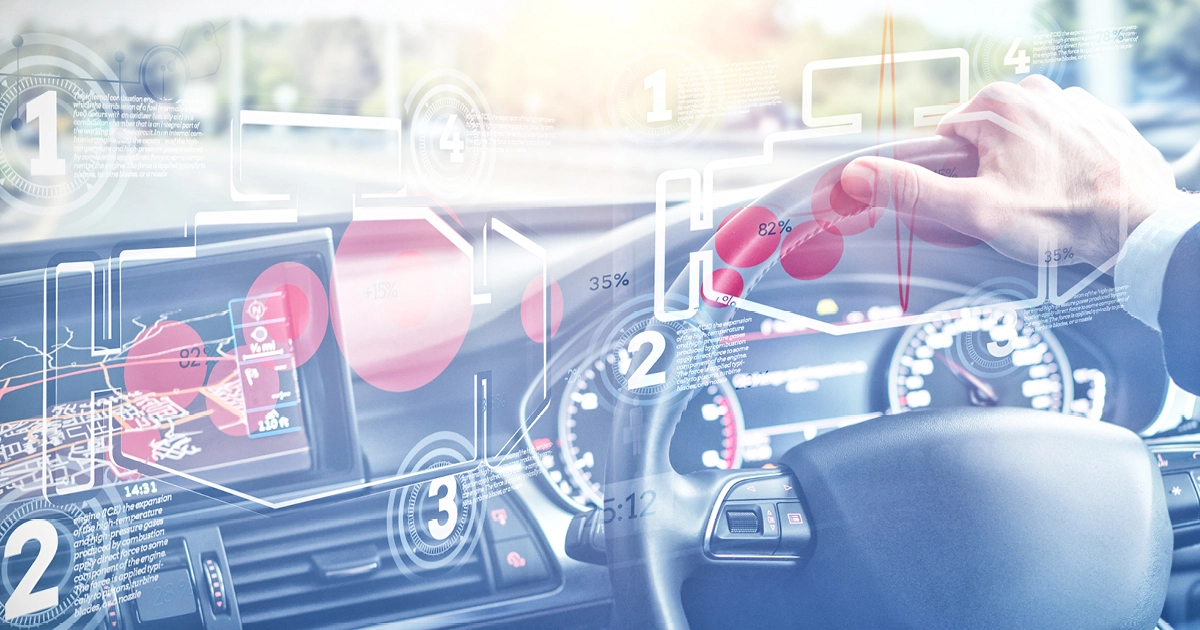
AR windshields are advanced head-up display systems that project digital information directly onto the windshield glass, creating the illusion that virtual objects exist in the real world outside the vehicle. Unlike traditional Heads-Up Display (HUD)s that show basic information in a small area, AR windshields can potentially use the entire windshield surface as a display. This feature keeps the driver paying attention to the road in front of them while receiving the information needed to continually operate the vehicle.  

Unlike the HUDs of the 90’s and early 2000’s, these modern projectors provide a plethora of information on navigation, vehicle information, entertainment and other things that the driver usually focuses off the road to adjust. As advanced drivers assistance systems (ADAS), are deployed further into the automobile, connecting that information to a HUD will provide predictive motions to minimize the possibility of a collision and increase operational satisfaction. Utilizing the thermal, LiDAR, Radar and on vehicle cameras, the information that can be displayed is increasing every day.  

Industry Innovation 

Major technology companies are also investing heavily in this space (Skirnewskaja & Wilkinson, 2022). Apple recently published a patent for an augmented reality display system that could be used as a vehicle windshield, with the system able to display information on one or more transparent surfaces of a vehicle (Tech, 2023). The innovation piece of this new augmented approach is the inclusion of external data that is not “on-car” to provide real time information to the driver without distracting them. The major shift of technology came when the use of Micro-LED equipped HUD equipment was deployed which brought with it a high-resolution and a small form factor needed for implementation within various automotive applications (Zhou et al., 2024).

This change from the previous larger form factor, multiple mirror applications allowed for a more integrated approach in vehicle dashboard deployments. Along with form factor, the micro-LED output has been a stronger image while using less than 10% of the required power of the previous generations (Zhou et al., 2024). The efficient use of on-vehicle power is of greater importance as the shift continues to occur to alternative propulsion systems.  

Challenges and Limitations 

Major limitations are related to regulatory requirements that media, other than what is required for vehicle operation, cannot be projected onto the windshield. An immersive experience for the driver must center around the use of the information for vehicle operations and collision avoidance. Most of the augmented windshields are not a fully emissive display panel, instead most production applications utilize a high-definition projector built into the dashboard. The picture generation unit (PGU) can only provide limited information as the ability for fully immersive images or interactive content is not yet available for this application (Erfani & Mansouri, 2026). As this technology continues to develop the ability of these systems will continue to advance. 

Conclusion 

Currently this technology is starting to proliferate throughout the OEM marketplace as the consumer is requesting this level of system integration. Providing information on a variety of topics that are required for proper vehicle operation, the ability to put it right at the eye level of the driver provides them with even more vehicle control. As it develops further the ability to project the surround view and backup cameras right at eye level will further get the driver to minimize the possibility of a collision. Still one of the main issues for this technology is getting a higher resolution image projection onto the windshield without beginning affected by sunlight. Integrating more vehicle specific content, highlighting potential hazards, utilizing night vision to see through the night and other ADAS related information, will further provide the driver with the tools to minimize a potential collision situation.  

Couple all of this information with onboard artificial intelligence (AI) with machine learning (ML) technology that can make real time calculations will provide instant suggestions for the driver to select. The system level integration is the next logical step in progressing the automotive field into one that is more driver immersive and futuristic. The automotive technician must be able to view these systems as a simple computer on a data line that is just projecting the information as an output. Understanding how this technology operates allows the technician to diagnose and repair these systems with precision. Automotive curriculum and learning materials must continue to advance to keep up with this rate of change in the field. Being aware of these technologies moves the technician in the right direction should something equipped with this comes into their service bay.  

The MAST CDX series gives instructors materials that surpass ASE training standards. Using the Read-See-Do model, students can choose their preferred learning style. CDX offers advanced simulations and technical content to support skill development in mechanical, electrical, and software-driven repair. Their expanding library helps keep classrooms updated on industry trends. See the Light Duty Hybrid and Electric Vehicles section and the full catalog

About the Author 

Nicholas Goodnight, PhD, is an Advanced Level Certified ASE Master Automotive and Truck Technician and Instructor at Ivy Tech Community College. With over 25 years of experience, he teaches workplace skills and authors several CDX Learning Systems textbooks, including Light Duty Hybrid and Electric Vehicles (2023), Automotive Engine Performance (2020), Automotive Braking Systems (2019), and Automotive Engine Repair (2018)

References 

Erfani, A., & Mansouri, A. (2026). Applications of multimodal large language models in construction industry [Article]. Advanced Engineering Informatics., 69, 103909. https://doi.org/10.1016/j.aei.2025.103909 

Skirnewskaja, J., & Wilkinson, T. D. (2022). Automotive Holographic Head-Up Displays. In Advanced Materials (Vol. 34, Number 19). John Wiley and Sons Inc. https://doi.org/10.1002/adma.202110463 

Tech. (2023, September 5). Hold your heads up high: Apple pushes HUD functionality in new patent for reality augmenting windows. EV Repair . https://www.evrepairmag.com/news/article/15767249/hold-your-heads-up-high-apple-pushes-hud-functionality-in-new-patent-for-reality-augmenting-windows 

Zhou, C., Qiao, W., Hua, J., & Chen, L. (2024). Automotive Augmented Reality Head-Up Displays. Micromachines, 15(4). https://doi.org/10.3390/mi15040442 

Related Content  

Stay Connected

Categories

Search Blogs

Featured Posts

Augmented Elegance: How AR Is Elevating the Modern Windshield

by  Nick Goodnight, PhD     Jun 2, 2026
ar-windshield

Looking through the windshield, the driver has a clear first-person view of the road. The ability of the vehicle to identify potential hazards before they are hazards, provide the driver information and enhance the driving experience is the whole purpose of the augmented reality (AR) windshield. Pulling from a futuristic movie, the windshield is one of the most overlooked components on a vehicle. It’s there to protect the occupants from flying debris and provide a way for the driver to be forward-facing and protecting the occupants from a head on collision with flying objects in case of a collision.  

Windshields as an Integrated Safety Device

AR windshields are advanced head-up display systems that project digital information directly onto the windshield glass, creating the illusion that virtual objects exist in the real world outside the vehicle. Unlike traditional Heads-Up Display (HUD)s that show basic information in a small area, AR windshields can potentially use the entire windshield surface as a display. This feature keeps the driver paying attention to the road in front of them while receiving the information needed to continually operate the vehicle.  

Unlike the HUDs of the 90’s and early 2000’s, these modern projectors provide a plethora of information on navigation, vehicle information, entertainment and other things that the driver usually focuses off the road to adjust. As advanced drivers assistance systems (ADAS), are deployed further into the automobile, connecting that information to a HUD will provide predictive motions to minimize the possibility of a collision and increase operational satisfaction. Utilizing the thermal, LiDAR, Radar and on vehicle cameras, the information that can be displayed is increasing every day.  

Industry Innovation 

Major technology companies are also investing heavily in this space (Skirnewskaja & Wilkinson, 2022). Apple recently published a patent for an augmented reality display system that could be used as a vehicle windshield, with the system able to display information on one or more transparent surfaces of a vehicle (Tech, 2023). The innovation piece of this new augmented approach is the inclusion of external data that is not “on-car” to provide real time information to the driver without distracting them. The major shift of technology came when the use of Micro-LED equipped HUD equipment was deployed which brought with it a high-resolution and a small form factor needed for implementation within various automotive applications (Zhou et al., 2024).

This change from the previous larger form factor, multiple mirror applications allowed for a more integrated approach in vehicle dashboard deployments. Along with form factor, the micro-LED output has been a stronger image while using less than 10% of the required power of the previous generations (Zhou et al., 2024). The efficient use of on-vehicle power is of greater importance as the shift continues to occur to alternative propulsion systems.  

Challenges and Limitations 

Major limitations are related to regulatory requirements that media, other than what is required for vehicle operation, cannot be projected onto the windshield. An immersive experience for the driver must center around the use of the information for vehicle operations and collision avoidance. Most of the augmented windshields are not a fully emissive display panel, instead most production applications utilize a high-definition projector built into the dashboard. The picture generation unit (PGU) can only provide limited information as the ability for fully immersive images or interactive content is not yet available for this application (Erfani & Mansouri, 2026). As this technology continues to develop the ability of these systems will continue to advance. 

Conclusion 

Currently this technology is starting to proliferate throughout the OEM marketplace as the consumer is requesting this level of system integration. Providing information on a variety of topics that are required for proper vehicle operation, the ability to put it right at the eye level of the driver provides them with even more vehicle control. As it develops further the ability to project the surround view and backup cameras right at eye level will further get the driver to minimize the possibility of a collision. Still one of the main issues for this technology is getting a higher resolution image projection onto the windshield without beginning affected by sunlight. Integrating more vehicle specific content, highlighting potential hazards, utilizing night vision to see through the night and other ADAS related information, will further provide the driver with the tools to minimize a potential collision situation.  

Couple all of this information with onboard artificial intelligence (AI) with machine learning (ML) technology that can make real time calculations will provide instant suggestions for the driver to select. The system level integration is the next logical step in progressing the automotive field into one that is more driver immersive and futuristic. The automotive technician must be able to view these systems as a simple computer on a data line that is just projecting the information as an output. Understanding how this technology operates allows the technician to diagnose and repair these systems with precision. Automotive curriculum and learning materials must continue to advance to keep up with this rate of change in the field. Being aware of these technologies moves the technician in the right direction should something equipped with this comes into their service bay.  

The MAST CDX series gives instructors materials that surpass ASE training standards. Using the Read-See-Do model, students can choose their preferred learning style. CDX offers advanced simulations and technical content to support skill development in mechanical, electrical, and software-driven repair. Their expanding library helps keep classrooms updated on industry trends. See the Light Duty Hybrid and Electric Vehicles section and the full catalog

About the Author 

Nicholas Goodnight, PhD, is an Advanced Level Certified ASE Master Automotive and Truck Technician and Instructor at Ivy Tech Community College. With over 25 years of experience, he teaches workplace skills and authors several CDX Learning Systems textbooks, including Light Duty Hybrid and Electric Vehicles (2023), Automotive Engine Performance (2020), Automotive Braking Systems (2019), and Automotive Engine Repair (2018)

References 

Erfani, A., & Mansouri, A. (2026). Applications of multimodal large language models in construction industry [Article]. Advanced Engineering Informatics., 69, 103909. https://doi.org/10.1016/j.aei.2025.103909 

Skirnewskaja, J., & Wilkinson, T. D. (2022). Automotive Holographic Head-Up Displays. In Advanced Materials (Vol. 34, Number 19). John Wiley and Sons Inc. https://doi.org/10.1002/adma.202110463 

Tech. (2023, September 5). Hold your heads up high: Apple pushes HUD functionality in new patent for reality augmenting windows. EV Repair . https://www.evrepairmag.com/news/article/15767249/hold-your-heads-up-high-apple-pushes-hud-functionality-in-new-patent-for-reality-augmenting-windows 

Zhou, C., Qiao, W., Hua, J., & Chen, L. (2024). Automotive Augmented Reality Head-Up Displays. Micromachines, 15(4). https://doi.org/10.3390/mi15040442 

Related Content  

Tags