The CDX Blog


How LiDAR is Helping Cars See the Road Before Drivers Do
by  Nick Goodnight, PhD     Aug 13, 2026
lidar-vehicles

When driving an automobile, the ability to see through fog, rain and other inclement weather has always been challenging for the driver. Utilizing cameras, sensors and other components; OEMs have tried to help the vehicle avoid obstacles within the roadway ever since the vehicle had been invented. Automotive LiDAR is one of the most important technologies shaping vehicle collision avoidance systems and autonomous driving. This technology can provide a 3D visual of the environment around the vehicle allowing the vehicle to see through inclement weather, darkness and vehicle instability. If you are an aspiring technician or just an automotive enthusiast, understanding how LiDAR operates, how it integrates and how it guides the vehicle is vital to transition to an autonomous future.  

What Is Automotive LiDAR? 

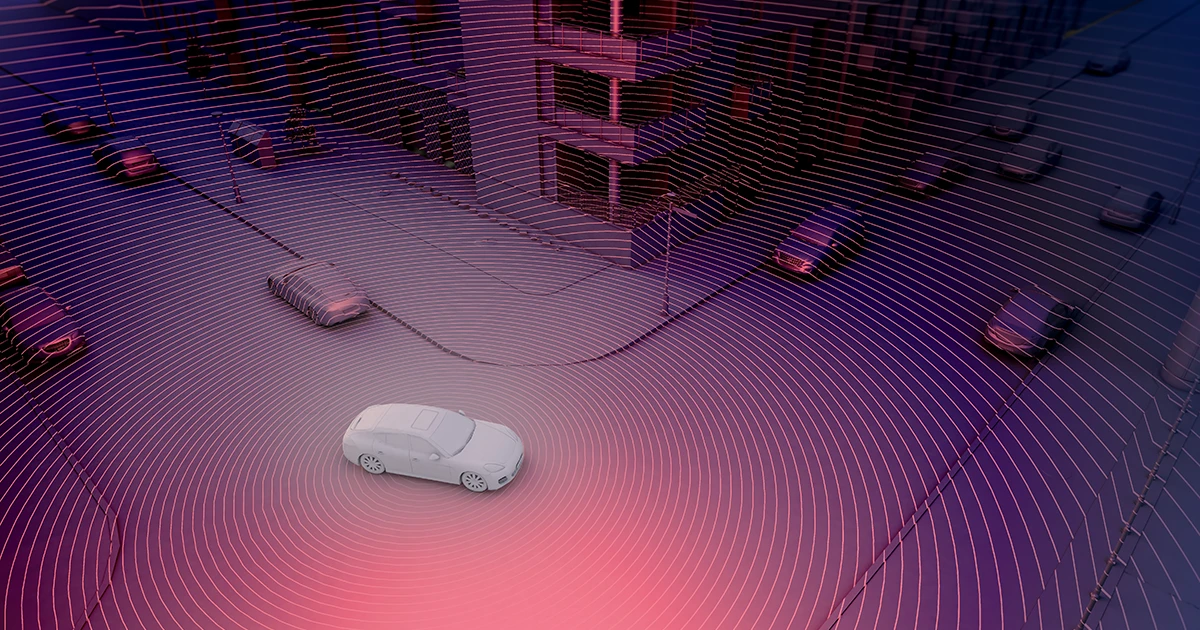
LiDAR stands for Light Detection and Ranging. In simple terms, it works by sending out laser pulses and measuring how long it takes for the light to bounce back from surrounding objects. That return time is used to calculate distance, and the system builds a detailed point cloud of the environment around the vehicle. This is similar to sonar that is used on submarines when it is measuring the return time frame to create a picture of the environment around it. This type of detection should not be confused with RADAR (Radio Detection and Ranging) which sends out an electromagnetic radio waves out in front of the housing and measures the time they reflect (Reenu Elizabeth et al., 2026). Unlike a camera or RADAR sensor, a LiDAR creates its own light (laser) based map of the surrounding environment. Utilizing laser projection creates a highly detailed map of edges, depths, shapes and speed of incoming objects so the on-board computers can calculate any mitigation needed to avoid the collision. The ability to see both stationary and moving objects gives the vehicle the information necessary to adjust its operation to maximize the operational situation of the vehicle. This system also provides another level of redundancy within the collision avoidance system to make sure the vehicle will see the potential collision object in the roadway.  

How LiDAR Works in Vehicles 

Automotive LiDAR systems usually include a laser source, optics, a receiver, and processing software. The sensor emits pulses of laser light, then measures the reflected signal from objects in the vehicle’s surroundings. The system uses those measurements to calculate depth and builds a 3D picture of the scene. Once that 3D image is generated the on-board computers can determine what is the best course of action is and direct the vehicle in the best possible way forward. Early versions of this technology required a continually spinning head unit that was mechanically complex and required a lot of power to operate (What Does a Lidar Sensor Do? How It Measures the World, 2026). As the progression to directional solid-state sensors the use case of LiDAR is increasing throughout the automotive industry as the cost to deploy these components has dramatically decreased which has led to an increased adoption of these types of sensors by automotive OEMs. Providing information on all directions in front of the sensor can require some applications to have more than one LiDAR sensor pointing in a different direction to provide a complete picture of the environment surrounding the vehicle.  

LiDAR and Sensor Fusion 

Autonomous operation requires many sensors to be combined into one clear view of the roadway. This includes identifying other vehicles, obstacles and any potential things that could potentially cause a collision with the vehicle. A camera may detect a traffic sign, radar may identify a fast-moving vehicle, and LiDAR may provide exact depth information about both. Adding this to the sensor network on the vehicle provides a redundant information source for the onboard ECUs to make informed decisions about objects in the front and around the vehicle. Figure 1 below shows the different types of components on the vehicle used to help direct the vehicle. As you can see RADAR and LiDAR are similar but have different strengths that fit the needs of an autonomous application. Cameras also play a vital role in object identification simulating what the human eye can see and when coupled with an AI enhanced onboard ECU; identifying what the object is or utilizing optical character recognition (OCR) it can provide different information to the computer.  

Challenges Facing Automotive LiDAR 

The use of LiDAR in an automotive application provides the vehicle with a powerful tool though it is not perfect. One of the major issues with deploying this equipment in a mass manufacturing situation is the cost of the components themselves. The packaging of the component must be one that will protect it from weather, heat and road debris, while still being able to provide a clear picture of the environment for use. Currently, the system still needs substantial processing power to turn the raw information from the sensor into a useful picture the ECU can utilize. This will accelerate as the development of the software defined vehicle (SDV), zonal vehicle architecture and automotive ethernet networking start to proliferate throughout the industry.  These higher computing power systems increase the capabilities of the vehicle to a point where it can process this information on vehicle without outside assistance.  

Conclusion 

Automotive LiDAR is becoming a cutting-edge technology in the future of autonomous driving. It delivers precise 3D sensing, supports sensor fusion, and plays a major role in advanced driver assistance and autonomous vehicle development. For the automotive technician they must be able to understand how this technology operates so they will be able to diagnose the issues that will arise from its deployment. The automotive program that is being built for the future should incorporate the theory and application of this technology into their curriculum to make sure their graduates are going to the repair facilities with the right base information so when they do upskilling, they will have strong base to fall back on. LiDAR is just one of the technologies that is being pushed by OEMs to help fill the gap needed to deploy level 3 and 4 autonomous vehicles. Understanding its place within the hierarchy is vital to moving the industry forward and developing the skill sets in automotive technicians to repair these systems.  

The MAST CDX series gives instructors materials that surpass ASE training standards. Using the Read-See-Do model, students can choose their preferred learning style. CDX offers advanced simulations and technical content to support skill development in mechanical, electrical, and software-driven repair. Their expanding library helps keep classrooms updated on industry trends. See the Light Duty Hybrid and Electric Vehicles section and the full catalog

About the Author 

Nicholas Goodnight, PhD, is an Advanced Level Certified ASE Master Automotive and Truck Technician and Instructor at Ivy Tech Community College. With over 25 years of experience, he teaches workplace skills and authors several CDX Learning Systems textbooks, including Light Duty Hybrid and Electric Vehicles (2023), Automotive Engine Performance (2020), Automotive Braking Systems (2019), and Automotive Engine Repair (2018)

References 

Reenu Elizabeth, J., Sara Varghese, S., Chandran, A., & Unnikrishnan, N. (2026). Electromagnetic Interference Shielding Technologies; Theory and Applications (1st ed.). CRC Press. https://doi.org/10.1201/9781003512363 

What Does a Lidar Sensor Do? How It Measures the World. (2026, March 12). Science Insights. https://scienceinsights.org/what-does-a-lidar-sensor-do-how-it-measures-the-world/ 

Related Content   

Stay Connected

Categories

Search Blogs

Featured Posts

How LiDAR is Helping Cars See the Road Before Drivers Do

by  Nick Goodnight, PhD     Aug 13, 2026
lidar-vehicles

When driving an automobile, the ability to see through fog, rain and other inclement weather has always been challenging for the driver. Utilizing cameras, sensors and other components; OEMs have tried to help the vehicle avoid obstacles within the roadway ever since the vehicle had been invented. Automotive LiDAR is one of the most important technologies shaping vehicle collision avoidance systems and autonomous driving. This technology can provide a 3D visual of the environment around the vehicle allowing the vehicle to see through inclement weather, darkness and vehicle instability. If you are an aspiring technician or just an automotive enthusiast, understanding how LiDAR operates, how it integrates and how it guides the vehicle is vital to transition to an autonomous future.  

What Is Automotive LiDAR? 

LiDAR stands for Light Detection and Ranging. In simple terms, it works by sending out laser pulses and measuring how long it takes for the light to bounce back from surrounding objects. That return time is used to calculate distance, and the system builds a detailed point cloud of the environment around the vehicle. This is similar to sonar that is used on submarines when it is measuring the return time frame to create a picture of the environment around it. This type of detection should not be confused with RADAR (Radio Detection and Ranging) which sends out an electromagnetic radio waves out in front of the housing and measures the time they reflect (Reenu Elizabeth et al., 2026). Unlike a camera or RADAR sensor, a LiDAR creates its own light (laser) based map of the surrounding environment. Utilizing laser projection creates a highly detailed map of edges, depths, shapes and speed of incoming objects so the on-board computers can calculate any mitigation needed to avoid the collision. The ability to see both stationary and moving objects gives the vehicle the information necessary to adjust its operation to maximize the operational situation of the vehicle. This system also provides another level of redundancy within the collision avoidance system to make sure the vehicle will see the potential collision object in the roadway.  

How LiDAR Works in Vehicles 

Automotive LiDAR systems usually include a laser source, optics, a receiver, and processing software. The sensor emits pulses of laser light, then measures the reflected signal from objects in the vehicle’s surroundings. The system uses those measurements to calculate depth and builds a 3D picture of the scene. Once that 3D image is generated the on-board computers can determine what is the best course of action is and direct the vehicle in the best possible way forward. Early versions of this technology required a continually spinning head unit that was mechanically complex and required a lot of power to operate (What Does a Lidar Sensor Do? How It Measures the World, 2026). As the progression to directional solid-state sensors the use case of LiDAR is increasing throughout the automotive industry as the cost to deploy these components has dramatically decreased which has led to an increased adoption of these types of sensors by automotive OEMs. Providing information on all directions in front of the sensor can require some applications to have more than one LiDAR sensor pointing in a different direction to provide a complete picture of the environment surrounding the vehicle.  

LiDAR and Sensor Fusion 

Autonomous operation requires many sensors to be combined into one clear view of the roadway. This includes identifying other vehicles, obstacles and any potential things that could potentially cause a collision with the vehicle. A camera may detect a traffic sign, radar may identify a fast-moving vehicle, and LiDAR may provide exact depth information about both. Adding this to the sensor network on the vehicle provides a redundant information source for the onboard ECUs to make informed decisions about objects in the front and around the vehicle. Figure 1 below shows the different types of components on the vehicle used to help direct the vehicle. As you can see RADAR and LiDAR are similar but have different strengths that fit the needs of an autonomous application. Cameras also play a vital role in object identification simulating what the human eye can see and when coupled with an AI enhanced onboard ECU; identifying what the object is or utilizing optical character recognition (OCR) it can provide different information to the computer.  

Challenges Facing Automotive LiDAR 

The use of LiDAR in an automotive application provides the vehicle with a powerful tool though it is not perfect. One of the major issues with deploying this equipment in a mass manufacturing situation is the cost of the components themselves. The packaging of the component must be one that will protect it from weather, heat and road debris, while still being able to provide a clear picture of the environment for use. Currently, the system still needs substantial processing power to turn the raw information from the sensor into a useful picture the ECU can utilize. This will accelerate as the development of the software defined vehicle (SDV), zonal vehicle architecture and automotive ethernet networking start to proliferate throughout the industry.  These higher computing power systems increase the capabilities of the vehicle to a point where it can process this information on vehicle without outside assistance.  

Conclusion 

Automotive LiDAR is becoming a cutting-edge technology in the future of autonomous driving. It delivers precise 3D sensing, supports sensor fusion, and plays a major role in advanced driver assistance and autonomous vehicle development. For the automotive technician they must be able to understand how this technology operates so they will be able to diagnose the issues that will arise from its deployment. The automotive program that is being built for the future should incorporate the theory and application of this technology into their curriculum to make sure their graduates are going to the repair facilities with the right base information so when they do upskilling, they will have strong base to fall back on. LiDAR is just one of the technologies that is being pushed by OEMs to help fill the gap needed to deploy level 3 and 4 autonomous vehicles. Understanding its place within the hierarchy is vital to moving the industry forward and developing the skill sets in automotive technicians to repair these systems.  

The MAST CDX series gives instructors materials that surpass ASE training standards. Using the Read-See-Do model, students can choose their preferred learning style. CDX offers advanced simulations and technical content to support skill development in mechanical, electrical, and software-driven repair. Their expanding library helps keep classrooms updated on industry trends. See the Light Duty Hybrid and Electric Vehicles section and the full catalog

About the Author 

Nicholas Goodnight, PhD, is an Advanced Level Certified ASE Master Automotive and Truck Technician and Instructor at Ivy Tech Community College. With over 25 years of experience, he teaches workplace skills and authors several CDX Learning Systems textbooks, including Light Duty Hybrid and Electric Vehicles (2023), Automotive Engine Performance (2020), Automotive Braking Systems (2019), and Automotive Engine Repair (2018)

References 

Reenu Elizabeth, J., Sara Varghese, S., Chandran, A., & Unnikrishnan, N. (2026). Electromagnetic Interference Shielding Technologies; Theory and Applications (1st ed.). CRC Press. https://doi.org/10.1201/9781003512363 

What Does a Lidar Sensor Do? How It Measures the World. (2026, March 12). Science Insights. https://scienceinsights.org/what-does-a-lidar-sensor-do-how-it-measures-the-world/ 

Related Content   

Tags